Industry Overview: Why Logistics App Development Is Transforming Transportation
The logistics industry has moved far beyond traditional phone calls, spreadsheets, manual registers, and fragmented communication. As businesses increasingly depend on fast and reliable transportation, technology has become essential for managing vehicles, drivers, bookings, deliveries, payments, and customers from a single ecosystem.
This shift has created strong demand for logistics app development, particularly among transportation companies, fleet operators, logistics businesses, truck owners, delivery companies, and startups building technology-driven transportation marketplaces.
A modern logistics app can connect customers with vehicles and transportation partners while allowing businesses to manage bookings, pricing, trip information, drivers, and deliveries digitally.
Instead of asking customers to call an operator, a well-designed logistics booking app can allow them to enter pickup and drop locations, select an appropriate vehicle, receive pricing information, confirm a booking, and track the trip.
For logistics companies, the technology can go even further. A comprehensive transportation management system can connect customer applications, partner or driver applications, administrative dashboards, location services, notifications, payment systems, and operational data.
The growing demand for technology-driven logistics has also made logistics app development services an important solution for businesses looking to digitise their transportation operations.
Current Challenges in the Logistics & Transportation Industry
Traditional logistics operations can become difficult to manage as the number of customers, vehicles, drivers, and daily trips increases.
1. Manual Booking Processes
Many transportation businesses still depend on phone calls, WhatsApp messages, spreadsheets, and manual records to manage bookings.
This can result in:
-
Delayed confirmations
-
Duplicate information
-
Communication gaps
-
Manual errors
-
Difficulty tracking booking status
-
Limited visibility for customers
A properly developed transportation app can move these processes into a structured digital environment.
2. Difficulty Matching Customers With Vehicles
Different shipments require different vehicle types.
A customer transporting a small load may not need the same vehicle as a business transporting commercial goods across cities.
A modern vehicle booking app development solution can allow customers to select vehicles according to their requirements while enabling the platform to manage suitable transportation partners.
3. Limited Trip Visibility
Customers increasingly expect to know where their goods are after a booking is confirmed.
Without digital tracking, customers may need to repeatedly contact the driver or transportation company for updates.
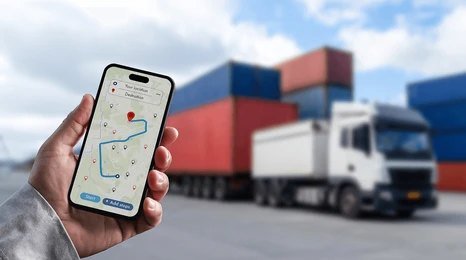
A tracking app can provide better visibility by integrating location and trip-status information.
4. Managing Multiple Drivers and Partners
As a logistics business grows, managing individual drivers, vehicle owners, agencies, and transportation partners manually becomes increasingly complex.
A digital platform can provide separate workflows for customers, partners, drivers, and administrators.
5. Pricing and Bidding Complexity
Not every transportation requirement can be handled through a single fixed pricing model.
Some trips may have predictable pricing, while others may require transportation partners to provide bids based on distance, vehicle availability, load requirements, and other factors.
This creates an opportunity for flexible logistics platforms that can support both fixed-price and partner-bidding workflows.
Key Features Businesses Need in Logistics Mobile App Development
A successful logistics platform needs to be designed around the complete transportation journey rather than simply providing a booking screen.
1. Customer Booking System
A customer-facing application should make booking as straightforward as possible.
Depending on the business model, customers can provide:
-
Pickup location
-
Drop location
-
Vehicle requirement
-
Trip type
-
Distance
-
Load details
-
Date and time
-
Contact information
The system can then process the requirement and present suitable booking options.
2. Vehicle Selection
A logistics business may operate or partner with multiple vehicle categories.
A modern app can display relevant vehicles and allow customers to select according to their transportation needs.
This is one of the most important components of logistics mobile app development because vehicle selection can directly affect pricing, availability, and trip execution.
3. Fixed Pricing and Bidding
One of the most useful capabilities of a custom logistics platform is the ability to support different booking models.
For eligible trips, customers can receive an estimated or fixed price and confirm the booking.
For other transportation requirements, the platform can allow partners or drivers to submit bids. Customers can then review available bids and select the option that best suits their requirements.
This approach can make a logistics app considerably more flexible than a basic booking application.
4. Driver and Partner Management
A logistics platform can provide partners with their own application or interface.
Partner functionality can include:
-
Receiving trip opportunities
-
Accepting bookings
-
Managing trips
-
Updating trip status
-
Accessing customer and pickup information
-
Navigation
-
Viewing earnings
-
Managing vehicle information
This creates a connected ecosystem between customers and transportation partners.
5. Real-Time Tracking
GPS-based tracking can provide customers and administrators with greater visibility into active trips.
A tracking app can integrate location data so that users can follow the progress of a vehicle during transportation.
This can improve transparency and reduce the need for repeated manual status calls.
6. Booking and Trip Management
Customers should be able to view their current and previous bookings.
The platform can maintain information related to:
-
Booking status
-
Vehicle
-
Driver or partner
-
Pickup
-
Drop
-
Trip status
-
Payment information
-
Digital documents
This creates a structured digital record for every transportation requirement.
7. Admin Dashboard
A logistics platform also requires a powerful backend.
An administrative dashboard can allow the business to manage customers, partners, vehicles, bookings, trips, pricing, transactions, and other operational information from a central system.
This is where a broader transportation management system becomes particularly valuable.
How Technology Solves These Logistics Problems
From Phone Calls to Digital Bookings
Instead of relying entirely on manual communication, businesses can provide customers with a digital booking journey.
The customer enters the required information, the system processes the request, and the appropriate workflow begins.
This can reduce operational friction while making the process more convenient.
Connecting Customers and Transportation Partners
A marketplace-style logistics application can create a connection between transportation demand and available supply.
Customers can submit requirements while drivers, vehicle owners, agencies, or partners can receive relevant opportunities.
This is particularly useful for an on demand logistics app, where transportation requirements can be matched with available vehicles and partners.
Real-Time Notifications
Notifications can keep users informed when important actions occur.
For example:
-
Booking confirmed
-
Partner assigned
-
Bid received
-
Trip accepted
-
Vehicle dispatched
-
Trip status updated
-
Delivery completed
This reduces uncertainty and keeps customers and partners connected throughout the transportation journey.
Digital Records and Data
Every digital booking can generate structured data.
Businesses can use this information to understand:
-
Booking volumes
-
Vehicle demand
-
Trip frequency
-
Partner performance
-
Customer behaviour
-
Revenue
-
Operational patterns
Over time, this data can support better business decisions and operational planning.
Logistics App Development Cost: What Determines the Investment?
One of the most common questions businesses ask before starting an app project is the logistics app development cost.
There is no single fixed price because logistics platforms can range from simple booking applications to complex multi-sided transportation ecosystems.
The cost of app development can depend on factors such as:
-
Number of applications required
-
Customer app functionality
-
Driver or partner app functionality
-
Admin dashboard
-
UI/UX complexity
-
GPS and live tracking
-
Booking workflows
-
Bidding functionality
-
Payment integration
-
Notification systems
-
API integrations
-
Backend architecture
-
Cloud infrastructure
-
Security requirements
-
Android and iOS support
For businesses considering logistics mobile app development cost, the most important first step is defining the required features and workflows.
A simple transportation booking application and a complete logistics marketplace can have very different development requirements.
Therefore, businesses should evaluate development cost based on the complete product architecture rather than only asking for the price of a mobile application.
Industry Trends in Transport and Logistics App Development
On-Demand Transportation Platforms
The rise of the on demand logistics app development model is changing how customers access transportation services.
Instead of maintaining long manual processes, users can submit requirements digitally and connect with available transportation providers.
Real-Time Tracking
Customers increasingly expect visibility into active deliveries and trips. GPS and location-based technologies are therefore becoming standard components of modern logistics platforms.
Multi-Sided Logistics Marketplaces
Modern logistics platforms can connect several groups within one ecosystem:
-
Customers
-
Businesses
-
Drivers
-
Vehicle owners
-
Fleet operators
-
Transportation agencies
-
Administrators
This makes marketplace-oriented transport and logistics app development increasingly valuable.
Flexible Pricing Models
Not every trip has identical requirements.
Modern platforms can support estimated fares, fixed pricing, negotiated pricing, or partner bidding depending on the business model.
Mobile-First Operations
Drivers and transportation partners spend much of their working day away from an office.
This makes mobile applications particularly useful for accepting jobs, managing trips, navigating to locations, updating statuses, and monitoring earnings.
Digital Documentation
Logistics businesses increasingly use digital trip information and documentation to reduce paperwork and make operational information easier to access.
Real Project Example: Fleetko – A Custom Logistics App Developed by BrandIT
A strong example of how these concepts can come together is Fleetko, a transportation and truck-booking platform developed by BrandIT Consultancy.
Fleetko is designed to connect customers and businesses with suitable trucks for local and long-distance goods transportation. Its website provides a digital journey where users can enter pickup and drop locations, select a vehicle, receive a fare estimate, confirm a booking, and track their trip.
Explore Fleetko
Customer-Focused Truck Booking
The Fleetko platform allows customers to choose from vehicle options based on their transportation requirements. The platform currently presents options including three-wheeler loading rickshaws and mini trucks for different types of loads and distances.
The customer journey is structured around five key steps: entering pickup and drop locations, selecting a vehicle, viewing the estimated fare, confirming the booking, and tracking the delivery.
This demonstrates how logistics booking app functionality can simplify a traditionally manual transportation process.
Fixed Pricing and Partner Bidding
Fleetko also demonstrates the value of flexible booking logic. Its platform supports transportation requirements through fixed pricing as well as partner bidding, allowing the platform to accommodate different types of trips and requirements.
This is particularly important when developing a custom logistics app, because businesses may not want to operate with a single pricing model.
Customer App and Partner App
The Fleetko ecosystem includes separate functionality for customers and vehicle partners.
The customer side includes capabilities such as:
-
Booking a truck
-
Selecting a vehicle
-
Getting a fare estimate
-
Tracking trips
-
Viewing trip details
-
Managing bookings
-
Accessing digital documents
-
Viewing payment information
The partner side supports receiving load opportunities, accepting bookings, managing trips, navigating to pickup locations, updating trip status, tracking earnings, and finding potential return loads.
This illustrates why serious logistics mobile app development often involves more than one application.
Partner and Vehicle Ecosystem
Fleetko also provides a partner onboarding model where agencies can register, add vehicles and drivers, complete verification, and receive relevant transportation opportunities.
The platform therefore demonstrates how a transportation application can combine customer demand, vehicle supply, partner management, booking workflows, and trip tracking within one digital ecosystem.
Local and Long-Distance Transportation
Fleetko's platform is designed around both local and longer-distance transportation requirements, with the website describing local bookings generally up to 100 KM and a dedicated category for trips beyond that distance.
This is an important consideration when developing logistics software because pricing, vehicle selection, and operational workflows can change according to trip distance and requirements.
Overall, Fleetko represents the type of customised technology ecosystem that can be created through professional logistics app development services—where the objective is not simply to build an app, but to digitise the complete transportation journey.
FAQ About Logistics App Development
What is logistics app development?
Logistics app development is the process of creating mobile and web-based technology solutions for managing transportation, bookings, vehicles, drivers, deliveries, tracking, pricing, and logistics operations.
What features should a logistics app have?
Important features can include customer booking, vehicle selection, pricing, bidding, driver or partner management, GPS tracking, notifications, trip management, payment integration, and an administrative dashboard.
How much does logistics app development cost?
The logistics app development cost depends on the application's complexity, number of platforms, features, integrations, backend architecture, and whether the system requires customer, driver, partner, and admin applications.
What is the difference between a logistics app and a transportation app?
A logistics app may focus on broader goods movement and supply-chain workflows, while a transportation app may focus primarily on booking and managing transportation services. However, modern platforms can combine both capabilities.
Can you develop an on-demand logistics app?
Yes. An on demand logistics app can be designed to connect transportation requirements with available vehicles and partners in real time.
Can a logistics app support bidding?
Yes. A custom platform can include a bidding workflow where transportation partners submit offers for eligible requirements, allowing customers to evaluate available options.
Can a logistics app include live tracking?
Yes. GPS and location technologies can be integrated into a tracking app so that customers, partners, and administrators can monitor active trips.
Do logistics apps require separate driver and customer applications?
Not always, but for marketplace or transportation platforms, separate experiences can make the workflows much more efficient. Fleetko, for example, provides customer and partner functionality tailored to their respective needs.
Can a logistics app be developed for both Android and iOS?
Yes. A business can choose native or cross-platform development depending on its requirements, budget, performance expectations, and long-term product strategy.
Is logistics app development suitable for startups?
Yes. Startups can begin with a focused Minimum Viable Product and progressively introduce advanced features as the business grows.
Why Choose BrandIT for Logistics App Development Company Services?
Developing a logistics application requires more than creating attractive screens. The technology needs to understand the movement of goods, vehicle availability, customer requirements, driver workflows, pricing, tracking, and administration.
BrandIT Consultancy can approach logistics projects as complete digital ecosystems rather than isolated mobile applications.
Our capabilities can include:
-
Customer mobile application
-
Driver and partner application
-
Admin dashboard
-
Logistics booking system
-
Vehicle management
-
Driver management
-
GPS and live tracking
-
Booking management
-
Partner onboarding
-
Bidding workflows
-
Pricing systems
-
Payment integration
-
Push notifications
-
Digital documents
-
Backend development
-
API integrations
-
Website development
For businesses looking for an app development company, app development services, or a specialised technology partner, the right development approach should begin with understanding the business model and operational workflow.
BrandIT can develop solutions tailored to the specific requirements of logistics companies, transportation businesses, fleet operators, startups, and marketplace platforms.
For businesses searching for an app development company in india, choosing a development partner with experience in real-world transportation platforms can provide valuable insight into the practical requirements of logistics technology.
Businesses specifically searching for mobile app developers in kolkata, an Android app development company in kolkata, an iOS app development company in kolkata, an app development company in kolkata, or a mobile app development company in kolkata can work with BrandIT to turn their transportation concept into a scalable digital product.
Conclusion: Building the Future of Transportation With Smart Logistics Apps
The logistics industry is moving toward a more connected, transparent, and technology-driven future.
Customers want simpler booking experiences. Transportation partners want more relevant load opportunities. Drivers need mobile tools to manage trips. Businesses need better operational visibility. Administrators need centralised control over the entire ecosystem.
A well-designed logistics platform can bring these requirements together.
From logistics app development and transportation app development to vehicle booking, partner bidding, GPS tracking, driver management, and digital trip records, technology can transform how transportation businesses operate.
The Fleetko project demonstrates how a custom platform can connect customers, businesses, vehicles, and transportation partners while supporting booking, fare estimation, partner workflows, tracking, and flexible pricing models.
The future of logistics is therefore not simply about putting a booking form inside a mobile application. It is about building an interconnected technology ecosystem that makes transportation easier to book, manage, track, and scale.
For businesses ready to digitise their transportation operations, the right logistics app development company can turn a complex logistics workflow into a practical, scalable, and customer-focused digital platform.